Mulch is a loose layer of material spread over bare soil to slow evaporation and keep roots cooler, and in UAE gardens it does more work than in almost any temperate climate. This guide sets out how much water each depth of mulch saves, which materials suit the heat, how thick to lay them, and where mulch goes wrong.
Why mulch matters more in UAE heat
Mulch matters more in UAE heat because far more water leaves bare sand through evaporation here than in cooler countries. A 5 cm organic layer cuts evaporation from the soil surface by roughly half, and deeper layers cut it further up to about 8 cm.
In a Dubai summer, sun heats the top layer of bare sand, and moisture wicks up through the pores from below to replace what's lost, like oil climbing a lamp wick. Mulch breaks that wick. Water can still move up to the base of the mulch, but the loose layer above has air gaps too wide to pull it further.
The same layer shades the soil. Bare sand in July can reach well above 60C at the surface. Under mulch, the top of the root zone stays far cooler, which keeps fine feeder roots working in the upper few centimetres where drip water lands.
One limit is worth knowing up front. Mulch cuts evaporation from the soil, and plants still lose water through their leaves. So a bed with half the soil evaporation doesn't use half the water in total. The saving on the irrigation bill is smaller than the evaporation figure, and it's largest in young beds where bare soil still shows between plants.
Evaporation reduction by mulch depth
Evaporation from UAE soil falls steeply over the first 5 cm of organic mulch and levels off after about 8 cm. These are approximate figures for bark or wood chip over sandy soil in full sun, drawn from general irrigation research rather than a Dubai trial.
- At 2 to 3 cm, surface evaporation drops by about 25 to 35 percent, and patches of sand show through within weeks as the layer settles.
- At 5 cm, the drop is around 50 percent, and this is the minimum depth that still covers the soil after a season of wind and settling.
- At 7 to 8 cm, the drop reaches roughly 60 to 70 percent, which is where most of the benefit has already been taken.
- At 10 cm and above, the extra saving is small, and the layer starts to hold rain and irrigation water in the mulch itself.
The shape of that curve matters more than the exact numbers. Going from nothing to 5 cm is the big win. Going from 8 cm to 12 cm costs as much material again for a few percent more.
Fine materials lose effect faster than coarse ones. Shredded compost packs down into a crust that wicks water like soil, so a 5 cm layer of compost behaves more like 2 cm of bark after a few months.
Which mulch type suits UAE heat
The mulch types that suit UAE heat are coarse organic materials such as shredded palm frond, pine bark and wood chip, plus gravel for dry, low water beds. Organic types keep soil coolest and feed it slowly. Stone lasts for years but stores heat through the afternoon.
Shredded date palm frond is the local option, made from garden waste already produced in the Emirates. It knits together, stays put in wind, and breaks down over about a year.
Pine bark and hardwood chip last longer and look neater. Coarse chunks resist the shamal wind better than fine shreddings, which blow into paths and pools.
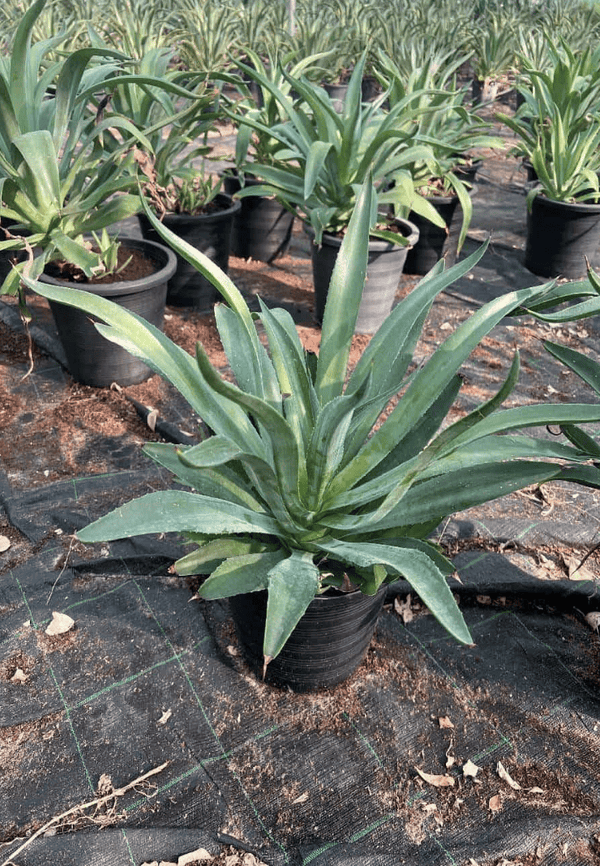
Gravel and stone work differently. They cut evaporation well, won't blow away and never need topping up. But they absorb heat all day and release it through the evening, so soil under dark stone runs warmer than under bark. That suits desert species such as Leucophyllum, aloe and agave, and it stresses shallow rooted shrubs and bedding. For xeric beds and paths, pale stone from the pebbles and gravel range makes a long lasting layer that holds less heat than a dark one.
How thick to mulch and how to lay it
Mulch UAE beds to a depth of 5 to 8 cm for organic materials and 4 to 5 cm for gravel. Keep every type about 10 cm clear of stems and trunks. Lay it over drip lines, not under them, and top organic layers up each October as they break down.
- Water the bed deeply the day before, so the mulch seals in moisture rather than covering dry sand.
- Pull weeds and rake the surface level, since mulch over live weeds only slows them.
- Run drip lines on the soil surface, then spread mulch over them so emitters drip into shaded ground.
- Spread the material to depth, checking with a ruler in three places across the bed.
- Pull it back from every stem and trunk to leave a clear ring of bare soil.
That bare ring is what prevents collar rot. Mulch piled against bark holds moisture on the stem through August's humid nights, and fungus gets in where the bark stays wet.
Leave lawns and seed beds unmulched. Seed can't push through a thick layer, and grass has no gaps for it to fill.
FAQ
Three practical points come up once a bed is ready for mulch: whether the effort pays off here at all, what to spread, and how deep to go. Each answer below is pulled from the depth figures and material notes above.
Does mulch work in the UAE?
Yes. A 5 cm organic layer roughly halves the water lost from bare ground and keeps the root zone far cooler in summer. The total water saving is smaller, since plants still transpire, but it's largest in young beds with bare soil between plants.
Which type of mulch is right for a UAE garden?
Coarse organic mulch suits most beds: shredded palm frond, pine bark or wood chip. Use gravel or pebbles for desert plants and dry xeric beds, choosing pale stone, because dark stone stores heat and warms the soil beneath it through the evening.
How thick should mulch be?
Lay organic mulch 5 to 8 cm thick and gravel 4 to 5 cm thick. Thinner layers settle and expose the soil within weeks. Deeper than 10 cm adds little saving. Always keep a 10 cm bare ring around stems and trunks to stop rot.
Was this guide helpful?