Calathea is a tropical houseplant in the prayer plant family, Marantaceae, grown for patterned leaves that lift and fold upward each evening. It's also the popular houseplant least suited to dry, cooled UAE rooms. This guide explains why, then covers watering, light, humidity and placement, and the common problems.
Why calathea is harder than other houseplants here
Calathea is harder because four of its traits all work against air conditioned air. It has thin leaves, no organ for storing water, an origin on humid rainforest floors, and roots that react badly to dissolved minerals. Most other common houseplants carry at least one defence against dry rooms. Calathea carries none.
The four traits in detail:
- The leaves are thin and broad, so they lose water across a large surface with little waxy coating to slow it.
- The plant has no swollen rhizome, trunk or succulent leaf to draw on when the mix dries.
- Wild calatheas grow on the floor of tropical American rainforest, where the air stays close to saturated.
- The roots are sensitive to the dissolved salts in UAE tap water, which build up in the mix and burn the leaf margins.
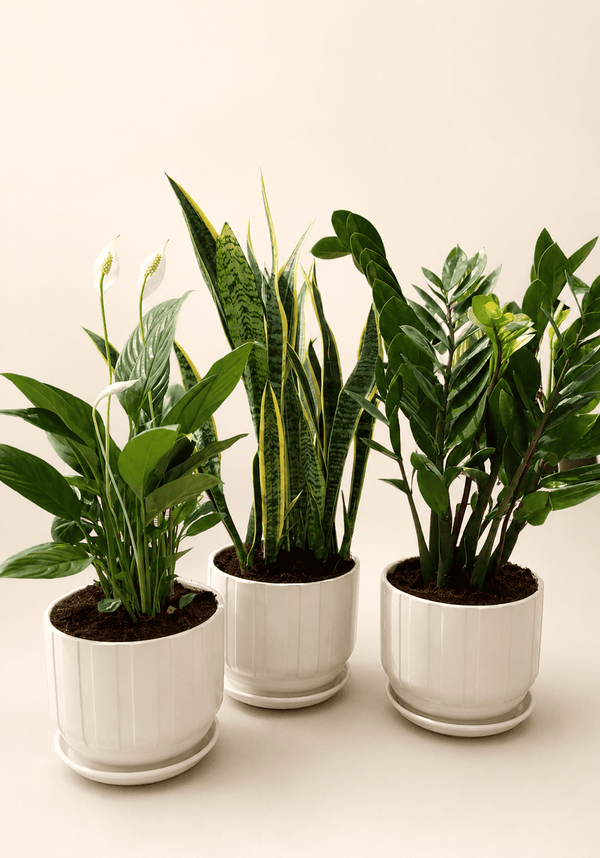
Compare that with a snake plant or ZZ plant, both of which store water in thick tissue and shrug off a week of dry air. A calathea left in a room at 23C with the AC running all day shows crisp brown edges within two to three weeks.
Most species sold as calathea were reclassified into the genus Goeppertia in 2012. Garden centres still use the old name, and the care is identical.
Watering calathea
Water a calathea when the top 2 cm of mix feels dry, and never let the whole pot dry out. The plant wants mix that stays evenly damp, like a wrung sponge. Because it hates a fully dry pot, a 15 cm calathea under AC usually wants water every 5 to 7 days.
Water quality matters more for calathea than for almost any other houseplant sold here. Use filtered or low-mineral bottled water where possible. If tap water is the only option, flush the pot with a generous amount of water once a month to push accumulated salts out of the drainage holes.
Leaves rolling lengthwise into tubes during the day are calathea's thirst signal. That's different from the normal evening fold, where leaves stand upright and close like hands in prayer, then open again by morning.
Light for calathea
Calathea needs medium, indirect light: bright enough to read by at midday, with no direct sun touching the leaves. Direct UAE sun, even through glass for an hour, bleaches the leaf patterning and scorches pale patches into the blade within days.
An east facing room a couple of metres back from the window works well, as does a north facing sill. Too little light shows up differently. The patterns stay but new leaves come in smaller, and the stems stretch toward the brightest point in the room.
Humidity and placement
Calathea grows well above 50 percent relative humidity, a level a cooled UAE room rarely holds for long. Placement is the practical fix. Grouping, a humidifier and distance from vents raise the air around the leaves more than any single trick.
Put the calathea among two or three other leafy plants, since a cluster of pots keeps moist air trapped between the leaves. A small room humidifier set nearby does more again. Leave 2 m or more of clear space between the calathea and any AC outlet, because moving air strips moisture off thin leaves faster than still air does.
Bathrooms with a window suit calathea well. The shower lifts the humidity every day and the frosted glass filters the light. A kitchen corner away from the hob works for the same reason.
Those same principles apply to every plant in the house to a lesser degree. The UAE plant care guide describes the local conditions that shape all indoor care here, and calathea is simply the plant that feels each of them first.
Common calathea problems
The four most common calathea problems are crisp brown leaf edges, leaves curling lengthwise, yellowing lower leaves and spider mites. Brown edges point to dry air or mineral build up. Curling points to thirst. Yellowing points to overwatering. Mites point to air so dry that they breed unchecked.
Brown edges won't turn green again. Trim them with clean scissors following the leaf's natural outline, leaving a thin brown line so the cut doesn't open fresh tissue.
Spider mites deserve a weekly look under the leaves, since calathea's soft tissue suits them. Fine speckling on the upper surface and faint webbing near the leaf stalks are the signs.
Anyone choosing a first calathea will find that the rounded leaf species handle indoor conditions better than the narrow, feathered types. The calathea plants in the indoor range can be placed in that kind of shaded, humid spot from the start.
FAQ
Owners who struggle with calathea want to know about watering, light and the problems that keep coming back. Each short answer below reflects conditions inside a cooled UAE home rather than the humid conservatory conditions that most care labels assume.
How do you water a calathea?
Water when the top 2 cm of mix is dry and keep the rest of the pot evenly damp. Use filtered or low-mineral water if you can, and flush the pot monthly if you use tap water. Never leave the pot sitting in a saucer of water.
How much light does a calathea need?
Calathea needs medium indirect light, with no sunbeam landing on the foliage. A spot a couple of metres back from an east window or right beside a north window works. Direct UAE sun fades the patterns and scorches the leaves within days.
What are the common problems with calathea?
Brown crispy edges from dry air or salt build up, lengthwise leaf curl from thirst, yellow lower leaves from overwatering, and spider mites. Raising the humidity around the plant and switching to low-mineral water prevent the first and last of those problems.
Was this guide helpful?