Xeriscaping is a garden design method that cuts irrigation by grouping plants according to how much water they need and giving each group its own supply. In Dubai it answers the summer water bill directly. This guide defines xeriscaping, sets out the 4 water zones, shows how to lay them out on a villa plot, and calculates how much water the zoning saves.
What xeriscaping is
Xeriscaping is a water efficient garden design approach built on matching each plant to the water available, grouping plants with the same demand, and shrinking lawn to the areas people use. It isn't a gravel and cactus style. A xeriscaped Dubai garden can hold lawn, shade trees and flowering shrubs.
The principles are practical ones. Plan the garden on paper by zone, improve the soil only where thirsty plants go, limit turf to used areas, irrigate each zone separately, mulch every bed, choose plants for the zone they'll sit in, and maintain the system. The zoning step carries the rest.
The 4 water zones
A xeriscape groups plants into 4 hydrozones by plant factor, the share of reference evaporation a plant needs to look good. High zones need 70 to 90 percent, moderate 40 to 60, low 10 to 30, and very low under 10 once established. Every plant belongs to exactly one zone.
- The high zone holds lawn, annual flower beds, vegetables and potted plants, all at a plant factor of 0.7 to 0.9.
- The moderate zone holds leafy flowering shrubs, hibiscus and ixora among them, at 0.4 to 0.6.
- The low zone holds bougainvillea, lantana, Texas sage and oleander, at 0.1 to 0.3.
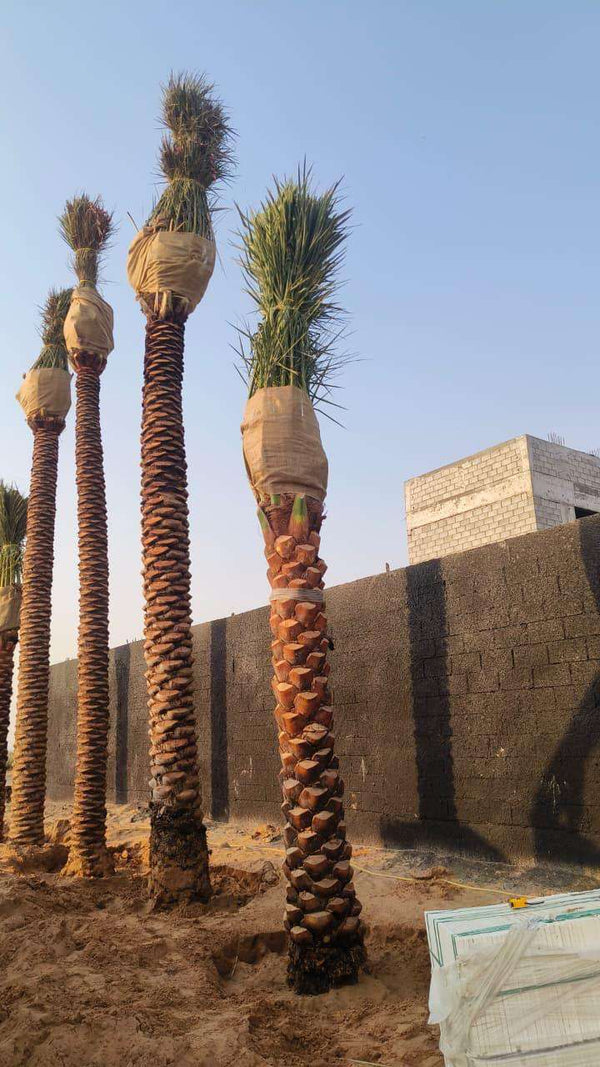
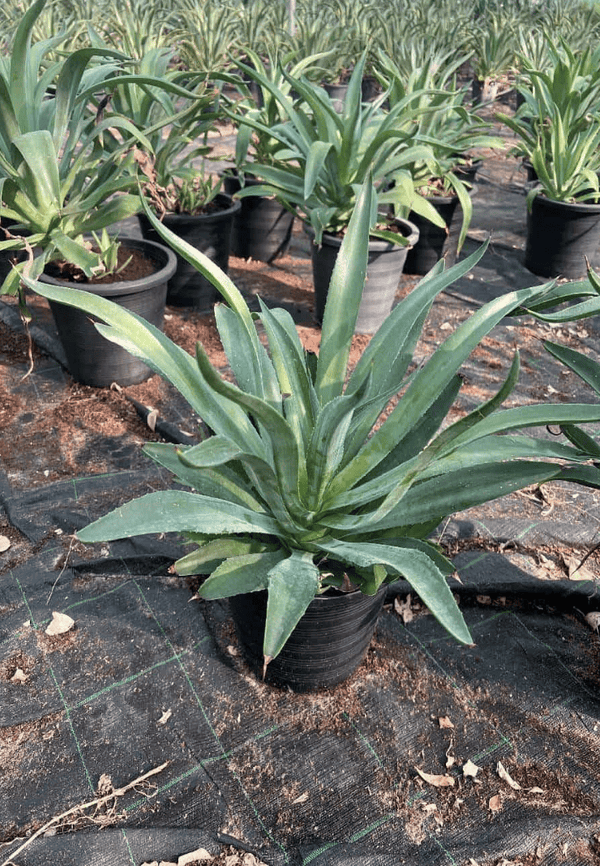
- The very low zone holds established cactus, agave and Parkinsonia trees, below 0.1, living on occasional deep soaks.
A mixed bed forces the whole bed to the thirstiest plant's schedule. One hibiscus among lantanas means every lantana gets hibiscus volumes, and the lantanas grow soft and floppy on it.
Pots are the exception to the zone map. A pot of any plant dries faster than the same plant in the ground, so every container counts as high zone and sits on the high zone's drip line, wherever it stands on the plot.
Laying out the zones on a villa plot
Lay out the zones in rings, with the high zone closest to the house and the very low zone at the boundary wall. People sit near the house, so the water goes where it's seen and used, and the outer rings survive on little. Follow 5 steps.
- Draw the plot to scale and mark the terrace, main windows, gate path and the areas used every day.
- Shade the hours of direct sun on each part, since a shaded bed sits one zone lower than the same plants in full sun.
- Place the high zone against the used areas and keep it small, ideally one lawn and one bed of pots.
- Step outward through moderate and low to very low, and keep zone edges on paths or walls so plants don't straddle two.
- Give every zone its own irrigation valve, so the very low zone can run once a fortnight while the high zone runs daily.
Mulch follows the zones too. Bark or compost mulch suits the high and moderate zones, where it holds moisture. Gravel suits the low and very low zones, where it keeps stems dry. For plants that fit the outer two rings, the drought tolerant plants range sorts shrubs and succulents that live on low zone volumes.
How much water xeriscaping saves
Xeriscaping saves water in proportion to the plant factors swapped. The daily need of any area equals reference evaporation times the plant factor times the area, so replacing a lawn at 0.8 with low zone shrubs at 0.2 cuts that area's water by three quarters.
Take a July day in Dubai with reference evaporation near 8 mm, which is 8 litres per square metre. A 100 m2 lawn at 0.8 needs 640 litres that day. The same 100 m2 planted as a low zone at 0.2 needs 160 litres. Moving it to very low, at 0.05, drops it to 40 litres.
The real saving depends on the irrigation too. Drip in the low zones puts down close to the calculated figure, while spray heads lose a share to wind and evaporation before the water lands.
Zoning a whole garden this way starts on the drawing board, and a landscaping service can measure the site, map the zones and plan one valve per zone before any planting.
FAQ
People new to xeriscaping ask two things before committing to it: what the method involves and how much it cuts from the water use. A third question comes from the gravel stereotype. The answers below stand alone and repeat the figures they rely on.
What is xeriscaping?
Xeriscaping is a garden design method that groups plants into water demand zones, irrigates each zone separately, limits lawn to areas in daily use and mulches every bed. It lowers irrigation while keeping shade, flowers and a usable lawn where people sit.
How much water does xeriscaping save?
Xeriscaping saves the difference in plant factor across the area changed. Turning 100 m2 of lawn into low water shrubs cuts that area's July need from about 640 litres a day to 160 litres, a drop of three quarters.
Does a xeriscape have to be gravel and cactus?
No, a xeriscape keeps high water plants in a small zone near the house. Gravel and cactus belong only in the outer, very low zone. The method limits thirsty planting to the areas people see and use every day.
Was this guide helpful?