Drip irrigation is a low pressure watering system that feeds water to each plant through small emitters at a set flow in litres per hour. Setting one up in a UAE garden comes down to the right parts, emitter flows sized to each plant against local evaporation, a sensible layout on sandy soil, a seasonal schedule, and knowing what decides the cost.
The parts a drip system needs
A garden drip system needs 9 parts, running from the tap to the plant: a controller, a valve for each zone, a filter, a pressure regulator, a mainline, lateral pipe, emitters, microtube for pots, and end caps. Leave out the filter or the regulator and emitters clog or blow off within months.
- A controller with a battery backup.
- A solenoid valve per zone, so beds with different needs water separately.
- A 120 mesh disc or screen filter to catch fine sand.
- A pressure regulator set to 1 to 2 bar.
- A 20 or 25 mm polyethylene mainline.
- 16 mm lateral pipe along each bed.
- Pressure compensating emitters, rated at 2, 4 or 8 L/h, that give the same flow at the near and far ends of a line.
- Microtube of 4 mm to carry water from the lateral to pots and hanging baskets.
- End caps that open to flush out sediment.
Matching emitter flow to plant type and evaporation
Emitter flow is matched by working out each plant's daily water need, then choosing emitters so every plant on a zone gets its share in the same run time. In a Dubai July that need is about 8 to 9 mm of evaporation a day, times a plant factor, times the area the roots cover.
One millimetre of water over one square metre is one litre. Dubai's reference evaporation sits near 3 mm a day in January, then climbs to 8 or 9 mm by July. Both are estimates from regional climate averages, and shade or wind shifts them.
Plant factors adjust that for how thirsty each type is: about 0.25 for desert shrubs, 0.5 for most garden shrubs and trees, and 0.8 for bedding plants. Worked through for July, four plant types come out like this:
- A desert shrub covering 1 square metre needs about 2 L a day, which one 4 L/h emitter gives in around 30 minutes.
- A garden shrub covering 1 square metre needs about 4.3 L a day, which two 4 L/h emitters give in around 32 minutes.
- A small tree with a 4 square metre canopy needs about 17 L a day, which four 8 L/h emitters give in around 32 minutes.
- A bedding pocket of a quarter square metre needs about 1.7 L a day, which one 2 L/h emitter gives in around 50 minutes, so bedding belongs on its own zone.
Size and count the emitters so every plant in a zone finishes together. Then one controller setting waters the lot correctly.
Laying out drip lines on sandy soil
On sandy UAE soil, lay drip with more emitters at lower flow rather than one large emitter per plant. Water from a point source in sand drops almost straight down, wetting a column only about 30 cm wide, so a single emitter leaves most of a root spread dry.
Place the first emitters about 15 cm from a new plant's stem. As the canopy widens, add more under the outer edge of the leaves, where feeder roots grow.
Keep zones by water need. Lawn, shrubs, trees and pots each get their own valve. A tree and a petunia on the same zone means one of them is always wrong.
Setting the watering schedule
A UAE drip schedule runs daily through summer and every second or third day in winter, with run time recalculated as evaporation changes. Using the July example, a shrub zone runs about 32 minutes a day in summer and about 11 minutes a day, or 22 minutes every second day, in January.
Adjust at the start of each month: April and October run about two thirds of the July time, and May and September close to the full figure.
Run cycles before sunrise and check the soil 10 cm down a few hours later. Damp to that depth means the run is long enough. Dry means lengthen it by 20 percent.
What decides the cost of a drip system
The cost of a garden drip system is decided by 6 factors: the number of zones, the length of pipe, the number of emitters, the supply pressure on site, the type of controller, and whether pipe has to cross existing paving. A site survey measures each of these before any quote.
One long bed plus a small lawn needs two zones. Separate front and back gardens with trees, hedges and pots need six or more. Low supply pressure can mean adding a booster pump.
For a system designed around the actual plot, irrigation services cover the survey, zone plan and emitter sizing, then the installation itself.
Choosing plants to suit the system
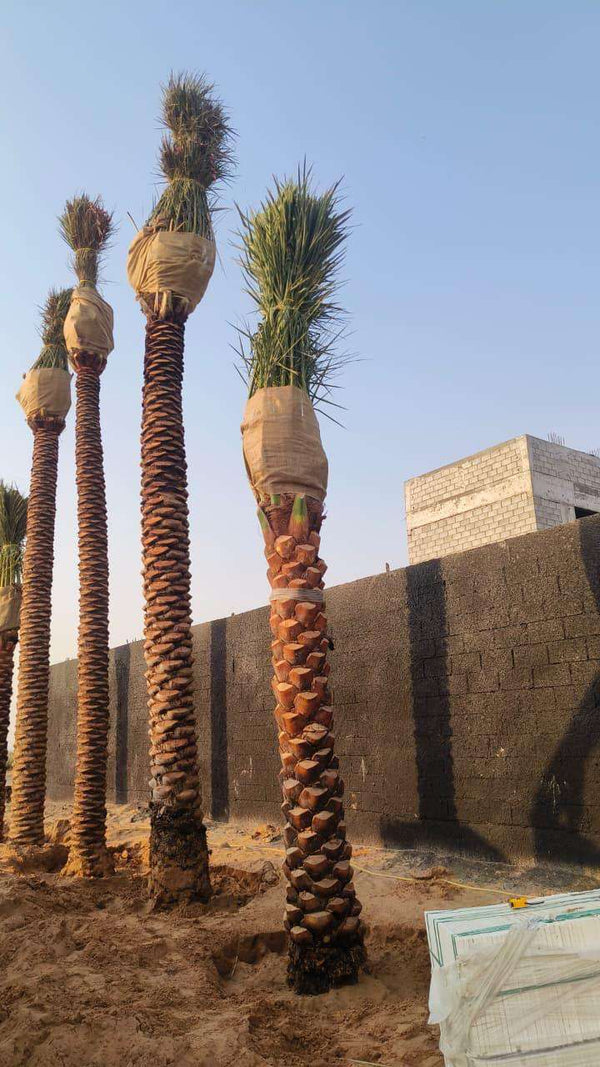
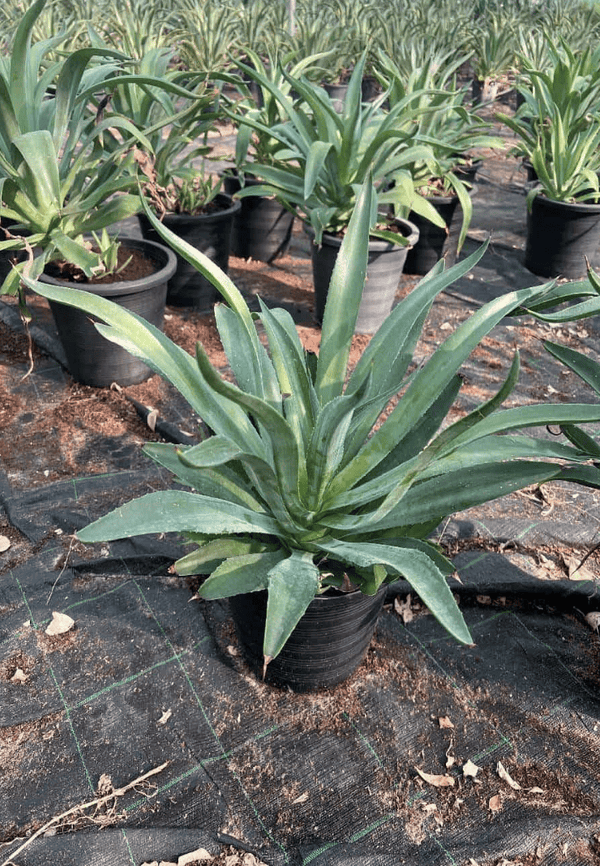
Plants that suit a drip system are ones grouped by similar water need on each zone, which keeps run times simple. Heat tolerant shrubs, palms and trees sit well together on drip, while thirsty bedding and ferns do better on their own separate valve.
When adding to beds, choose from the outdoor plants range by water need, so a new arrival fits an existing zone.
FAQ
Parts, timing and money are what anyone planning a drip system asks about first. Each answer below compresses one section of this guide into a few lines, using the same July figures, so it can be checked against a real garden before buying.
What parts do you need for drip irrigation?
Nine parts: a controller, a valve per zone, a 120 mesh filter, a regulator at 1 to 2 bar, a 20 or 25 mm mainline, 16 mm laterals, pressure compensating emitters, 4 mm microtube for pots, and end caps for flushing sediment out.
What watering schedule suits drip in the UAE?
Run drip daily from May to September, before sunrise, and every second or third day from December to February. A shrub zone with two 4 L/h emitters per plant runs about 32 minutes a day in July. Recalculate at the start of each month.
What does drip irrigation cost?
The cost depends on zones, pipe length, emitter count, site water pressure, controller type and any paving that has to be crossed. No fair number exists until a site survey has measured those on the actual plot.
Was this guide helpful?