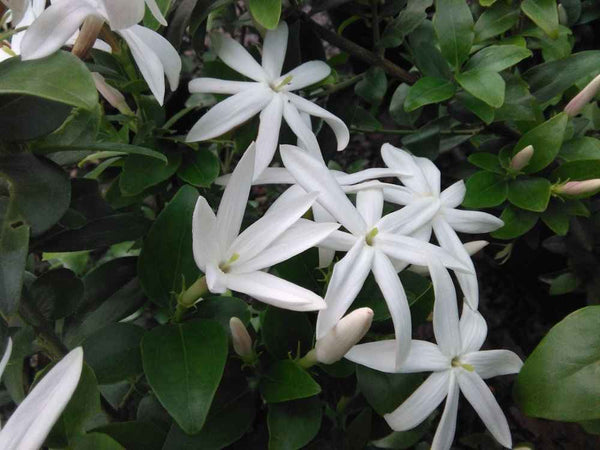
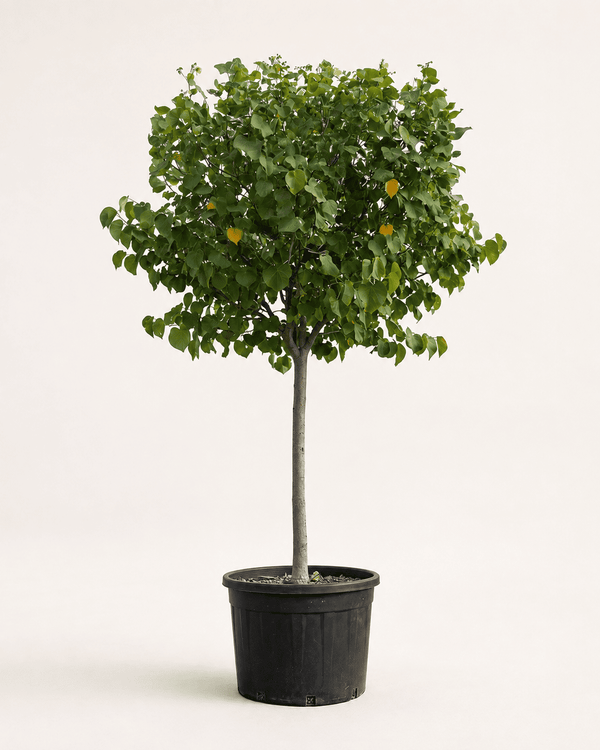
Frangipani, or Plumeria, is a small succulent stemmed tree from tropical America grown across the UAE for its scented, waxy flowers. This guide explains the winter leaf drop that worries new owners and why it's normal, then sets out how to water through the leafless and leafy months, how much sun it wants, and which problems actually need action.
When frangipani drops its leaves in the UAE
Frangipani drops its leaves in the UAE between December and February, when night temperatures fall below about 15C and days shorten. Plumeria rubra, the common type with pointed leaves, goes fully bare for six to ten weeks. It's normal seasonal behaviour, and the tree is resting rather than dying.
The drop follows a set sequence. Lower leaves yellow first in late November or December, then fall over two to four weeks until only bare, thick grey branches remain, each ending in a blunt tip.
In March, as nights warm past about 18C, new leaves unfurl from those tips, and the first blooms open in April or May.
Two variations change the picture. Plumeria obtusa, the Singapore type with rounded, glossy leaves and white flowers, keeps most of its leaves through a mild UAE winter. And position shifts the timing: a tree by a warm wall may drop only half its leaves, while one on an exposed rooftop can go bare in November.
Why winter leaf drop isn't a problem
Winter leaf drop isn't a problem because frangipani is naturally deciduous in a dry season, and it stores water and energy in its thick stems. Bare, it loses almost no water. A bare tree with firm branches is healthy.
The real risk in winter is the owner's reaction. A bare frangipani looks dead, so it gets watered and fed to bring it back. With no leaves to use that water, the roots sit in wet, cool soil, and that's when stem and root rot start.
A quick pinch tells a resting branch from a dying one. Squeeze each branch about 10 cm below the tip. Firm, like a cucumber, means it's fine. Soft, wrinkled or mushy means rot, and that section needs cutting back to firm wood.
Leaf drop outside winter is a different matter. Leaves falling in July or August on a well established tree usually point to root damage from waterlogging, or severe drought stress in a pot. That needs checking.
How to water frangipani through the year
Water frangipani deeply but infrequently, and let the soil dry between waterings. In summer, a tree in the ground on drip needs water two to three times a week. While it's bare in winter, it needs almost none, about once every three to four weeks.
From April to October, while in leaf and flowering, water a ground planted tree with a long, slow soak that reaches 30 cm down, then wait until the top 5 cm is dry. A frangipani in a 50 cm pot on a sunny terrace needs water every other day through July and August.
Cut watering back in November as leaves yellow. Once the tree is bare, water only enough to stop the root ball drying out completely.
Restart normal watering when new leaves appear in March, not before. Waking the tree with water while the branches are still bare is the most common cause of spring rot.
Drainage matters more than frequency. A frangipani in a pit that holds water fails in its first winter, however carefully it's watered.
How much light frangipani needs
Frangipani needs full sun, six hours or more daily, before it flowers well here. It's among the few flowering trees that thrive in open, south or west facing positions through the summer. In shade it grows long, weak branches and flowers poorly, if at all.
Unlike most shrubs in this series, frangipani doesn't need afternoon protection in July. Its thick, waxy leaves handle direct sun at 45C, and the more heat it gets in spring and summer, the more flower heads it sets.
Common frangipani problems
The 3 common frangipani problems in the UAE are frangipani rust, stem rot and mealybugs, and each shows a clear sign. Rust leaves orange powder under the leaves, rot turns branches soft, and mealybugs cluster as white wax where leaves meet the stem.
First, frangipani rust appears as bright orange pustules on leaf undersides from late summer, followed by yellow spots on top. Pick off and bin affected leaves, rake up fallen ones, and keep water off the foliage.
Second, stem rot starts at a branch tip or the base, turning bark black and the stem soft. Cut back to firm, clean wood with a sterile blade and let the wound dry before watering again.
Third, mealybugs hide in leaf joints and on flower stalks. Wipe them off with cotton dipped in alcohol, or spray insecticidal soap weekly until they're gone.
For how UAE heat, water and soil combine on garden plants across the Emirates, the UAE plant care guide explains why frangipani copes so well here.
Choosing a frangipani to plant
A good frangipani to plant has firm, unwrinkled branches, no black patches at the tips and a well drained root ball. Buying in spring, as new leaves form, shows the tree's health clearly. A tree bought bare in winter needs the pinch test on every branch.
Nursery grown frangipani planted in a sunny, fast draining spot in spring has the whole warm season to root before its first bare winter.
FAQ
Most frangipani worries in the Emirates trace back to one question, whether a bare tree is still alive. The answers below cover watering, light and trouble, each one drawn from the seasonal pattern of leaf drop and regrowth described earlier.
How do you water frangipani?
Water deeply, then let the top 5 cm dry. In summer, water a ground planted tree two to three times a week and a potted one every other day. When it's bare in winter, water only once every three to four weeks, and restart when new leaves show in March.
How much light does frangipani need?
Frangipani needs full sun, at least six hours a day, and it handles west facing positions through UAE summer without shade. In shade it stretches, and a tree under a canopy rarely flowers at all.
What are the common problems with frangipani?
Winter leaf drop is normal. The real problems are frangipani rust, which leaves orange powder under leaves, stem rot from watering a bare tree, and mealybugs in the leaf joints. Soft, wrinkled branches are the sign that something is wrong.
Was this guide helpful?